
When Stories Blossom: Recognizing Your Manuscript’s Growth Stages
Your manuscript is growing. It just might not be blooming yet.

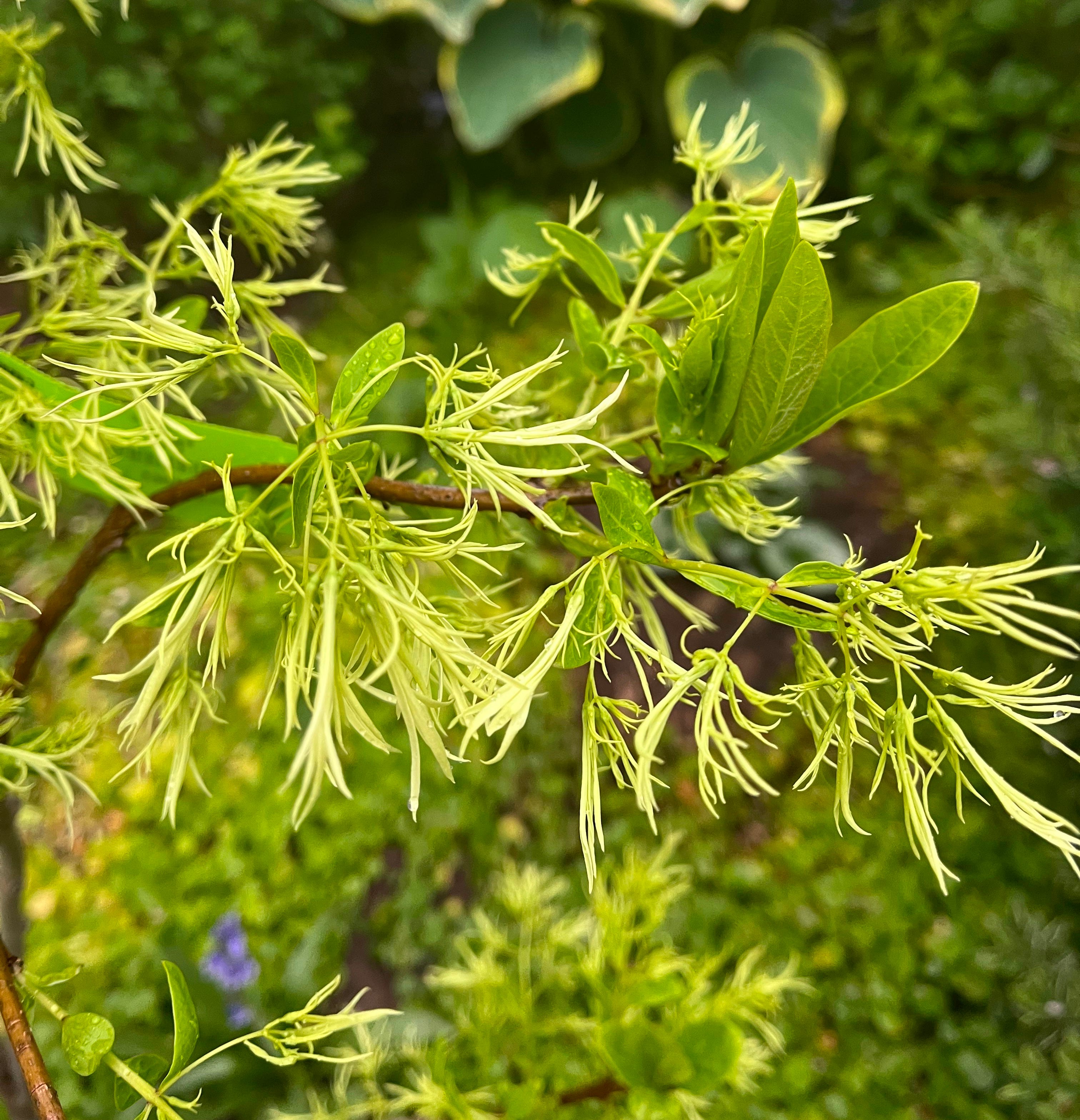
There’s an ornamental bed I’ve been slowly adding to for years that I worked on last October. I know exactly what’s in there—the plants, the shrubs, the colors, the transplants I made. I’ve been watching that bed since February, and until a few weeks ago (given our fickle New England weather), there was nothing to see but wood-chipped ground and my own impatience.
Then the shoots finally appeared.
I didn’t make that happen by checking more often. The plants emerged when the conditions were right: enough cold, enough warmth, enough time in the ground. My job was to plant correctly and stay out of the way.
Stories work in much the same way. They have growth stages, each with its own requirements, and the most common mistake writers make isn’t revising too much or too little. It’s applying the wrong intervention at the wrong stage. Pruning a seedling. Watering a plant that needs sun. Harvesting before the fruit is ripe.
Knowing where a manuscript is changes what it actually needs from the author.
The Seedling Draft
A first draft is fragile in the specific way seedlings are fragile: it has just broken ground, its root system is minimal, and the wrong kind of attention will kill it faster than neglect will.
What this stage needs is completion. Not polish, not perfection, just reaching the end. The structure is visible but may be weaker than necessary. Some sections thrive; others wilt when the sun comes out. That’s expected. The author is still discovering what this story wants to be, and the only way to find out is to keep writing.
A potential danger here is editing while drafting—going back over yesterday’s pages, trimming, second-guessing. That’s like leaf pruning a seedling. You’re cutting growth before it has a chance to flourish, and the plant doesn’t have the reserves to recover. Many writers who do this may find themselves at chapter four, forever. The seedling never gets its larger true leaves.
However, for some writers, this approach is helpful and can re-root them in the story, especially at the start of a writing session. I’m one of those. The trick here, then, is to know when to step out of the sticky clay and move on with the next ideas and let the words flow.
Both approaches lead to the same place: Write forward. Leave the mess. The mess is where the roots grow from.
Established Growth
By the second or third draft, the manuscript has roots. Its shape is there. You know what the story is, even if you can’t fully articulate it yet, and the structure is strong enough to handle bright, sunlit attention.
This is the stage where strategic revision earns its place. Cut what isn’t serving the plant. Strengthen what is. Deepen the character arcs, clarify the stakes, look honestly at the structure and ask what’s holding weight in scenes and what’s decorative. This is also the right moment to bring in outside perspective—beta readers, a manuscript assessment—because the manuscript is established enough to survive scrutiny without collapsing.
The signs of this stage are: the story can be explained clearly, the major beats are in place, the characters have arcs even if those arcs need refinement. It feels close but not there yet. That feeling is accurate. It’s not there yet. Let it keep growing.
Budding
Late revision is its own distinct stage, and writers often miss the transition. The work now shifts from structural to granular. Sentence-level changes, prose polish, the difference between a scene that does what it needs to and a scene that sings. The story knows what it is. Small refinements make large differences in this stage.
The danger at this stage is the opposite of the seedling problem: instead of pruning too early, writers may over-revise. They keep restructuring when the structure is sound. They rewrite scenes that were working because they can’t quite believe they’re done. Prolonged stress on a plant that’s ready to flower doesn’t improve the bloom. It depletes the plant.
If beta readers are saying “this works really well, just needs polish” but scenes are still being moved around, pay attention to that. The reactions signal the stage and the shifting work is likely too much.
Flowering
A manuscript that’s ready is ready. Not perfect—what garden is ever perfect?—but complete in the sense that it’s doing what it was always meant to do. The story is vibrant and whole, and it’s time to let it be seen.
This stage has its own particular difficulty. After months or years of growth, the habit of tending can be hard to break. There’s always one more thing on the list to examine. One more pass. One more scene to reconsider. But a flower held in a vase too long fades there.
When you’ve done multiple revision passes, incorporated substantive feedback, and can’t identify what to fix without breaking something that works, that’s the signal. It’s done. Let it bloom and be admired.
When the Manuscript Won’t Move
Some manuscripts stall. They stay in vegetative growth for a long time, not quite budding, and no amount of additional revision seems to move them forward.
This usually indicates a root problem rather than a surface one. The foundation isn’t strong enough to support flowering—something in the core conflict, the stakes, or the character’s central need isn’t fully developed yet. Or there’s a condition mismatch: the story is being forced to grow in the wrong environment, and it’s not as robust as it could be. A quiet character study being pushed toward thriller pacing. A cozy mystery being revised for tension it was never designed to hold.
None of this means the manuscript is lost. It means the conditions need to change before growth can continue. Sometimes that means setting it aside and coming back when the creative well is refilled or the writer’s craft has grown. Sometimes it means a more honest look at the foundation. The plant isn’t the problem. The soil is.
Right now, in my garden, things are at different stages all at once. The lilacs are just finishing flowering. The peonies are budding out. The Asiatic ginger groundcover in the back is already spreading, ahead of everything else. None of them are in the wrong. They’re just on their own timelines, doing the work appropriate to the environmental conditions.
A manuscript has a timeline too. The best thing to do is figure out which stage it’s actually in—not the stage you wish it were in—and give it what that stage requires.
The bloom will come. It just needs the right conditions and enough time.~