
The Microclimate Problem: Why Cozy Fiction Is Harder Than It Looks
The stakes are real. The author just has to build them from the inside out.

The word cozy does something to people’s assumptions before they’ve read a single page.
Low stakes. Easy read. Simple pleasures. These aren’t wrong, exactly, but they describe the reading experience, not the writing challenge. The two are not the same. A cottage garden looks charmingly haphazard. Achieving that apparent spontaneity—the right plants, the right succession, the right controlled chaos—is another thing entirely.
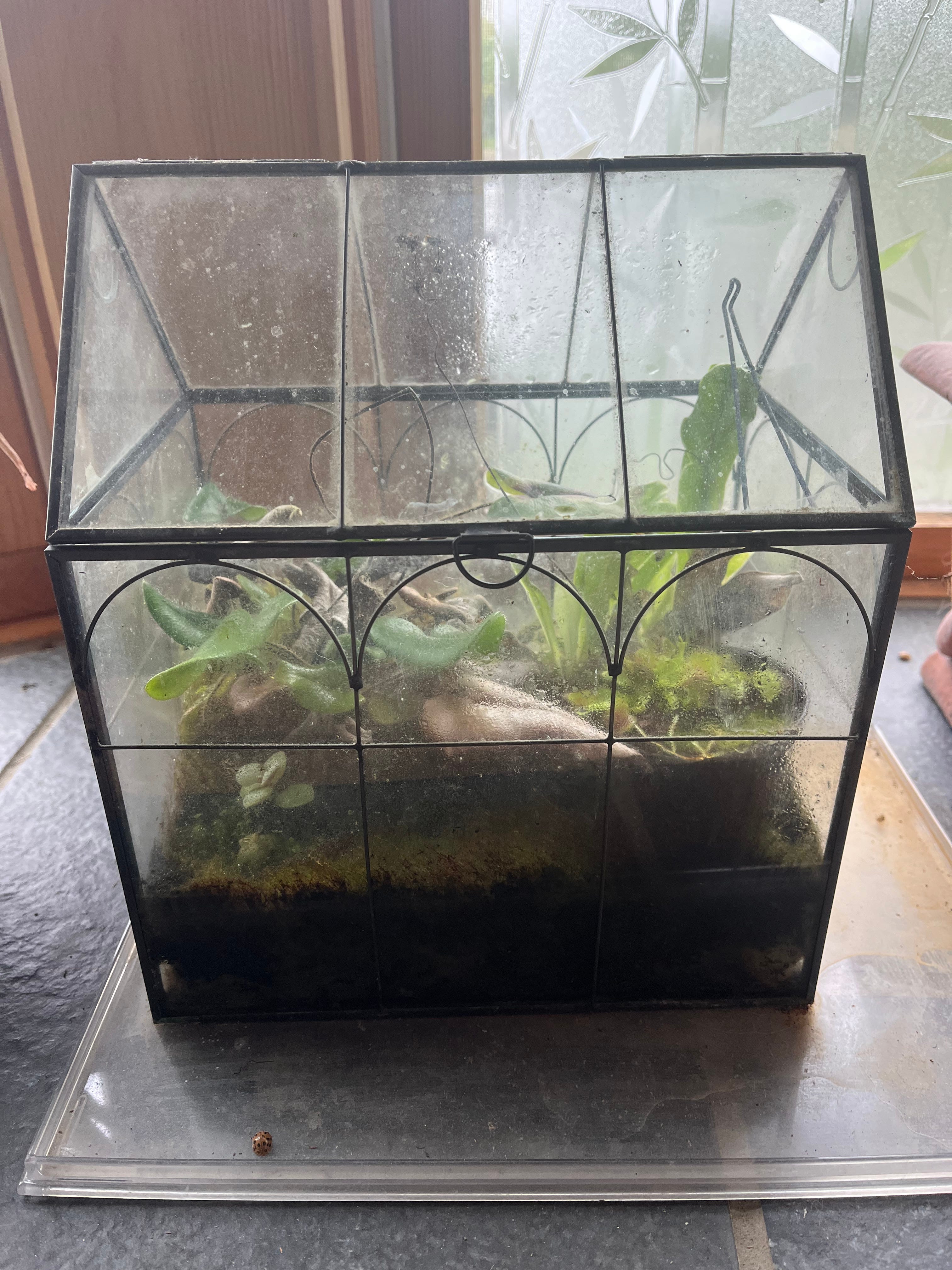
A microclimate isn’t a lesser climate. It operates at a different scale, under its own pressures, with its own specific points of failure. The alpine meadow above the tree line isn’t a diminished forest. It’s a specialized system; more intricate, more fragile, and in many ways more demanding to sustain than the sprawling ecosystem below it. Remove one element and the whole thing destabilizes. There’s no redundancy. That’s not weakness. That’s the nature of a system built with precision and intent.
Cozy fiction is a microclimate. And building one that holds is among the more demanding stakes work in genre fiction.
Scope and Stakes Are Not the Same Thing
This is where the assumptions go awry, for readers who become writers and carry the wrong premise with them.
Stakes are what the character cannot afford to lose. Scope is the scale of the world in which she might lose it. Cozy compresses scope. It does not compress stakes.
A protagonist who wants nothing more than to run her tea shop in peace, stay out of other people’s business, and keep the life she’s built intact—she’s operating under stakes as real and urgent as any thriller hero. The difference is that cozy offers less external scaffolding that affects the protagonist. No ticking bomb, no global threat, no mechanism borrowed from outside the character to manufacture urgency. The stakes have to live entirely inside the character and the reader’s belief in them.
When writers internalize “low stakes” as a genre description and accidentally apply it to character desire, the result is a specific kind of drift. The tea shop matters a little less. The friendships become decorative. The disruption is inconvenient rather than genuinely threatening. The reader drifts too, and they usually can’t name why. The plot is functional. The mystery resolves. Yet something is still missing.
What’s missing is the tangible weight of what’s at risk. And that weight doesn’t come from the size of the threat. It comes from the depth of the want.
The Calibration Problem
Before stakes can land, the reader has to be calibrated to the character’s world. This is the work that precedes everything else, and it’s where most cozy manuscripts have the most to do—not in plot structure, not in mystery mechanics, but in the quieter accumulation of evidence that this particular life, to this particular person, is worth protecting completely.
Calibration isn’t intellectual. Readers can understand intellectually that the protagonist values her independence, her shop, her small routines. That understanding doesn’t make them feel the cost when those things are threatened. Calibration is felt. The reader absorbs, through repeated contact, why this specific thing matters this much, until the character’s priorities become inescapable rather than observed.
It requires specificity of desire. Not “she wants peace” but the precise texture of what peace means to her—what it cost her to build, what it looked like the morning she first had it, what she does to protect it that she’d never admit to. Vague desire produces vague stakes. The more precisely the author knows what the character wants, the more exactly the reader can feel what losing it would mean.
This requires consistency across the whole manuscript, not just the crisis beats. Every scene is an opportunity to reinforce what matters. How she answers a question she’d rather avoid, what she notices first when she walks into a room, what she gives up quietly when protecting something she won’t name out loud, why she prefers to stay in on Friday night. The calibration isn’t a passage or a chapter. It’s the texture of the entire story.
Reinforcement Is Not Repetition
Most cozy manuscripts that need work don’t need the author to tell the reader more clearly what the stakes are. They need the author to stop telling and start accumulating.
Reinforcement is not repetition. It’s not restating the protagonist’s desire at intervals, or returning to it in moments of explicit reflection. It’s the steady, quiet presence of what matters in every choice, every reaction, every scene so consistently that the reader absorbs it without registering it as information delivery.
When reinforcement is working, readers don’t consciously think she wants her quiet life back. They feel the cost of every scene that threatens it. The stakes operate below the surface. The reader is inside the character’s priorities rather than observing them.
In a functioning ecosystem, no single element announces its importance. The mycorrhizal network running beneath a meadow doesn’t declare itself. It’s simply there, doing invisible work that holds everything else up—moving nutrients, signaling stress, connecting root systems that appear separate above ground. Reinforcement is the mycorrhizal network of cozy stakes. You don’t see it. You feel the difference when it’s missing.
Why This Is Precise Work
High-concept genres have external pressure to lean on. The thriller reader feels urgency because the threat is visible and ticking. The author still has to do the character work, but the scaffolding exists; the mechanism provides some of the tension on its own.
Cozy doesn’t have that. The urgency has to be built from the inside out, through the character, through the reader’s belief, through the accumulation of small moments that together make the quiet want feel inescapable. There is no borrowed machinery.
This is not easier than writing toward external stakes. It is a different and more precise skill—one that requires the author to trust specificity over escalation, depth over drama, the small true thing over the large obvious one.
The authors who do it well don’t reach for bigger threats when the stakes feel flat. They go back to the character and find the more exact want. Then they put it everywhere.
A Note on the Reader’s Side of This
Some readers choose cozy precisely because they want lower emotional investment—the pleasure of a contained world, a resolvable problem, a gentler demand on their attention. That’s a legitimate reading experience and not what this post is arguing against.
The craft question is separate from the reader’s preference. A reader who wants to feel at ease inside a cozy world is still best served by a microclimate built with precision; one where the stakes are proportional and fully realized, where the character’s world has weight and texture, where the resolution satisfies because something real was at risk. The reading experience of ease and warmth is the outcome of craft, not the absence of it.
The cozy reader who says a book felt thin isn’t asking for higher stakes in the conventional sense. They’re asking for better calibration. More of the invisible work.
The Microclimate Has to Hold
The alpine meadow doesn’t need to be a forest. It needs to be itself—fully, specifically, with no element left inert.
Cozy fiction at its best is sustained persuasion: convincing the reader that this world, this person, this particular quiet want is worth caring about completely. Not because the stakes are large. Because the author never let them look away.
That’s the work. It isn’t less than other genres demand. It’s a different demand—interior, cumulative, precise. A microclimate that thrives because every element in it is doing its job.
If your cozy manuscript has the right structure but the stakes aren’t landing the way you expect, it’s often a calibration issue—the kind that shows up in the texture of individual scenes rather than in the plot. Story Ecosystem Assessments™ look at how a manuscript’s elements are working together, including where reinforcement is thin and where the reader is being kept at arm’s length from what matters.
Aime Sund is The Narrative Gardener—a fiction editor and horticulturist at Red Leaf Word Services, where she helps genre fiction authors grow stronger stories through her Narrative Ecology™ framework.
I'm very simple. I enjoy a well-written "cozy" mystery or whatever once in a while because it's fun and distracting.